

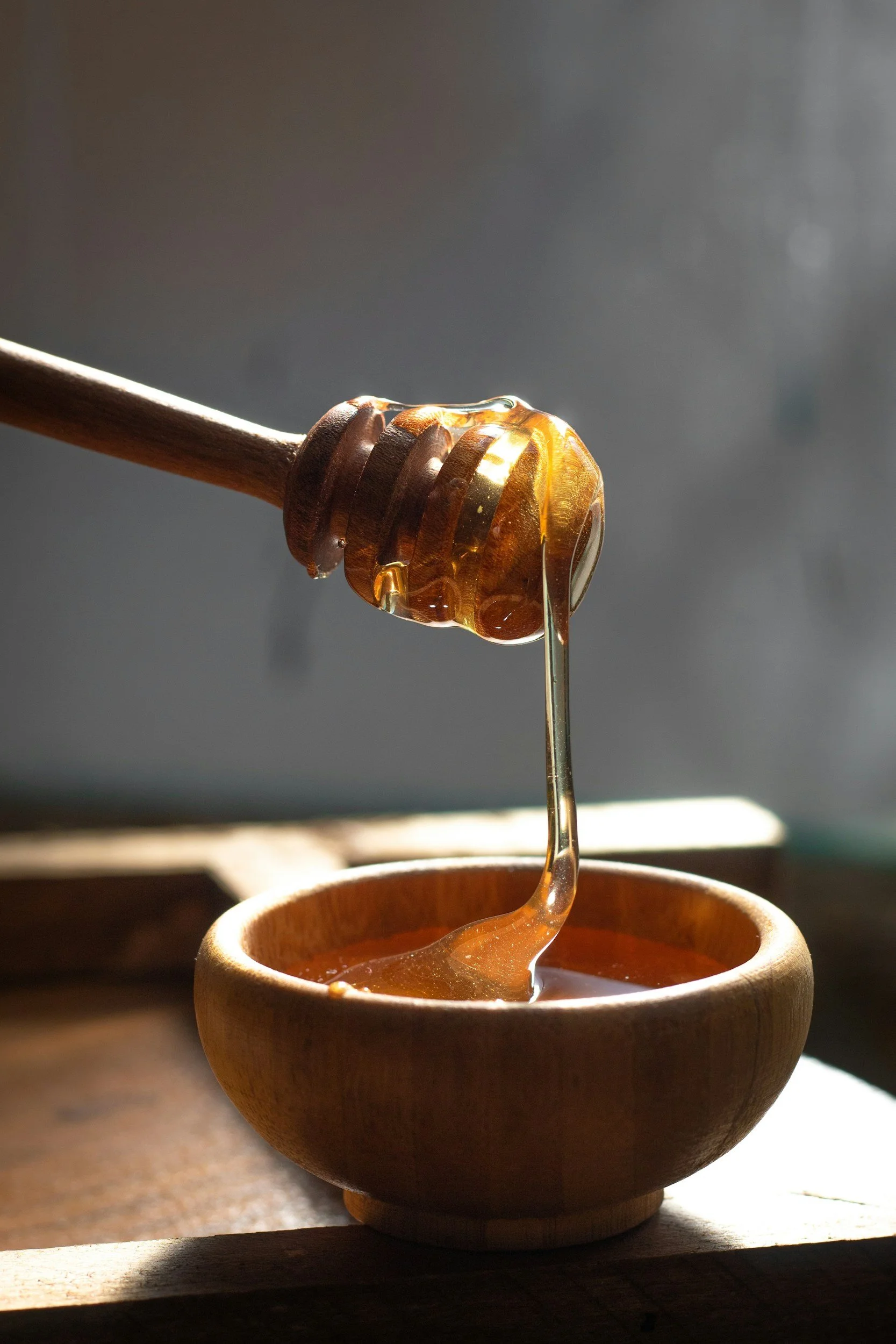
Searching for Trail & Finding Gold
Any time that I’ve moved to a new place, one of the first things I do is explore with the intention of finding trails. Preferably off the beaten path, but simply anywhere that I can trail run or throw on a weighted vest and hike.
My free time during my first couple of weeks living in Northeastern Pennsylvania was spent racking up a list of good trails: logging roads, old stone quarry trails, and a few hard-to-find spots leading to waterfalls and lakes. Living in the sticks, in a town of 700 people with dirt roads and no stoplights, meant endless opportunities to find such places.
One day, when I was searching for the trailhead of an old rail trail, I passed an apiary. Although I was a multi-year-long honey fanatic at this point, I am ashamed to admit that I instinctively thought it must have something to do with apples.
After learning that it had absolutely nothing to do with apples and everything to do with one of my favorite foods, I decided I needed to stop in as soon as possible.
A few days later, I walk into a 200-plus-year-old wooden building, and I see an entire room filled with beeswax candles, hundreds of jars of honey, a woman working at an antique spinning wheel, and a man in a white ponytail.
Although stepping through the door felt like walking through a portal back in time, I couldn’t have been happier. I felt like a kid in a candy store.
After receiving an in-depth educational lesson on honey, I left with a 5-pound jar of both Goldenrod and Clover.
During that time, I had a very restricted diet, so my only carb sources were fruit, Japanese sweet potatoes, and honey. Combined with the amount of outdoor activity I was doing, this led me to eat lots and lots of honey. After all, if John the Baptist did it, why couldn’t I?
I visited the apiary frequently to replace my empty jars, experience the different types in the region, and learn as much as I could about how honey is made and why it should be something we eat for our health, longevity, and energy levels.
Let’s dive into some of the reasons why it may be a good idea for you to add honey to your diet.
Nutrition Bomb
A common misconception about honey is that it’s just another sweetener for your tea. But this is only true with commercial honey, such as the ‘bear’ you see on the shelf at the store, which has been pasteurized and heated to high temperatures.
However, raw honey is more medicine than a sweet treat. With 22 amino acids, 27 minerals (including iron, zinc, potassium, calcium, magnesium, and selenium), 5000 enzymes, and, according to Dr. Josh Axe, at least 16 antioxidants, honey packs quite the punch.
Another benefit of this syrupy multivitamin is its use as a fuel source. Raw honey is roughly 80% carbohydrates, which are necessary for giving your brain, nervous system, and muscles the energy they need to function.
While most carbohydrate sources today are processed carbs and processed sugars, raw honey is a pure, healthy alternative that won’t affect your blood sugar the way unnatural sugars will.
Raw honey is made up of both glucose and fructose. Glucose is rapidly absorbed and can give you a quick bump in energy, while fructose is metabolized differently, primarily in the liver. Due to this combination, honey tends to have a moderate impact on blood sugar compared to pure glucose. For most people, I wouldn’t worry about it negatively affecting blood sugar unless you have a specific condition.
Because of this, I love using honey as a pre-, intra-, or post-workout fuel source. It doesn’t sit in my stomach like a brick, and it provides a quick, easily digestible source of energy. Paired with protein post-workout, it can also support my recovery.
MEdicine
Remember those antioxidants we talked about earlier? They are essentially little warrior-compounds that help neutralize free radicals and protect your cells and DNA. Combine that with the minerals we mentioned and other components, and you’ve got yourself the perfect cough medicine.
Studies have shown that raw honey is just as effective as, or even superior to, medicines such as Diphenhydramine for upper respiratory tract infections [1]. Next time you have a cough, go ahead and take some of this bee medicine.
Not only for coughs, but because honey is antiviral, antibacterial, and antifungal, it can aid in the remedy of most illnesses.
But this doesn’t just apply to ingesting honey; it's also effective in these ways when applied topically.
Years ago, I had an infection in my hand that was eating my bones. It took two surgeries and several ozone shots directly into the joint over a two-year period to clear the infection.
Not long after that, I got a cut on my hand that wouldn’t heal, and it was infected for weeks. Hydrogen peroxide, alcohol, and antibiotic ointments didn’t make a dent. Not wanting to repeat my one-handed nightmare scenario, I applied Manuka honey to the wound several times a day. Within a week or so, it was completely healed.
Due to its natural acidity (low pH), Hydrogen peroxide production via the enzymes we discussed, and antioxidant content, honey is a fantastic treatment for cuts, wounds, and burns [2]. In fact, even some operating rooms are using mesh patches combined with honey to prevent infection after surgery [3].
Try reaching for that honey next time you need an internal or external remedy for coughs, colds, and wounds.
Gut-Brain BEnefits
We now know that the gut-brain axis is a bidirectional network, meaning the gut influences the brain, and vice versa.
Good news for us: honey can boost both gut and brain health. Double whammy.
On the gut side, honey acts as a natural prebiotic [4], which is food for the good bacteria (probiotics) in your large intestine. Having a healthy microbiome directly influences your immune system, digestion, and yep, brain health. When your gut is out of whack, so is your mood and processing center.
In parallel, honey may have substantial direct benefits for brain health, such as serving as a nootropic (cognitive enhancer) and aiding in mitigating oxidative stress in the brain, thereby acting as a neuroprotective agent to prevent or slow neurodegenerative diseases [5,6].
Is it a magic gut/brain potion? No, there are definitely some powerhouses out there, such as blueberries or dark chocolate, that pack a bigger punch, but honey will still make an impact. Plus, processed junk wrecks your gut. Replacing your sugar sources with honey helps protect your microbiome.
Adding it In
Always check with your doctor before adding a new food to your diet or using something as a supplement or replacement for medicine.
But once you get the green light, head to the store and try some out.
WHAT KIND?
Look for both raw and unfiltered honey. Remember those nutritious enzymes I mentioned earlier? Those get cooked out when honey is pasteurized, whereas raw honey keeps them in. Filtering the honey also takes out some of the pollen, wax, and other natural particles that may be beneficial. Forgo the bear on the shelf and get some of the good stuff.
Want to get super fancy? Get yourself some Manuka honey, which also contains additional compounds (like methylglyoxal) that make it particularly potent. The higher the UMF (between 5+ & 25+) and MGO (between 30+ & 1000+) ratings, the more potent it is. It’s expensive, but worth it when used medicinally. Especially when it comes to gut health and wound healing.
HOW MUCH?
Up to you. Honey is high in carbs, so, unless you’re an endurance athlete or you don’t have many other carb sources, I’d limit it to small doses, treating it as a spoonful of medicine or a treat.
WHEN?
When I’m sick, I use it as needed. Otherwise, I only eat it surrounding my workouts, or when I want to make a dish pop, like eggs or chicken—don’t knock it till you try it.
As far as age goes, wait at least 1 year (some say 2) to give it to babies. Otherwise, this could be a hazard.
The Bottom Line
Ditch processed sugars and carbs, and start using natural sweeteners like honey to give you energy, nutrition, and an overall health boost. Humans have been eating honey for thousands of years for very specific reasons; not just because they didn’t have access to high fructose corn syrup. Let’s get back to our roots a bit.
Subscribe to my blog for more health and wellness tips, or schedule a free call with me if you’re looking to get your lifestyle, nutrition, or fitness in check.
References
[1] https://pubmed.ncbi.nlm.nih.gov/32817011/, https://www.mayoclinic.org/symptoms/cough/expert-answers/honey/faq-20058031, https://pmc.ncbi.nlm.nih.gov/articles/PMC4264806/#sec4
[2] https://pmc.ncbi.nlm.nih.gov/articles/PMC3941901/#sec21363, https://www.uclahealth.org/news/article/medical-grade-honey-is-viable-tool-in-wound-care, https://pubmed.ncbi.nlm.nih.gov/36010001/
[3] https://www.frontiersin.org/news/2019/12/04/manuka-honey-sandwich-fighting-infections
[4] https://pmc.ncbi.nlm.nih.gov/articles/PMC9367972/#S4
[5] https://pmc.ncbi.nlm.nih.gov/articles/PMC4020454/#sec4
[6] https://pmc.ncbi.nlm.nih.gov/articles/PMC10096917/
